
B2B Co-Creation Sandbox
Logistics
Across Cycles
Open API Sandbox + Quarterly Hackathons + Ecosystem Marketplace
An enterprise co-creation model that turns challenges into experiments, plugins, and marketplace launches
Project overview
Project Background & Objectives
Throughout 2024–2025, SF Express has continued to prioritize large enterprise clients and cross-border capabilities, laying the business foundation for enterprise co-creation and ecosystem development.

Core Value Proposition
Through an open API sandbox and regular hackathons, SF Express turns logistics pain points into market-ready plugins. Developers, partners, and enterprise clients can test innovative solutions in a secure sandbox. Standout solutions are listed on the ecosystem marketplace and commercialized through a 70/30 revenue-sharing model, creating a sustainable innovation ecosystem.
Core strategy
Three Core Strategies
Open sandbox, hackathons, and ecosystem marketplace—a complete enterprise co-creation cycle.



01
Open API Sandbox
A development environment that simulates real-world workflows, allowing developers to test new solutions safely.
02
Quarterly Hackathons
Competitions focused on pain points across logistics operations inspire innovative solutions.
03
Ecosystem Plugin Marketplace
Turn standout co-created solutions into commercial products, supported by sustainable revenue-sharing incentives.
- Comprehensive API documentation and SDK support
- Simulated real-world orders, routing, and delivery workflows
- Data masking to protect customer privacy
- Real-time monitoring and performance analytics
- Support for multiple programming languages
- Real business challenges released every quarter
- Multi-track evaluation across technology, commercial value, and innovation
- End-to-end mentoring from SF Express technical experts
- Commercialization support for winners
- Hybrid online and in-person events
- 70/30 revenue split (developer/platform)
- Plugin review and quality certification
- Usage-based or subscription pricing
- Ongoing updates and technical support
- Developer community and knowledge base
The Innovation Cycle
Identify Challenges → Experiment in the API Sandbox → Compete in Hackathons → Develop Plugins → Launch on the Marketplace → Share Revenue
A complete path from business pain point to commercial product—giving every innovative idea a chance to generate revenue
API SANDBOX
Open API Sandbox Architecture
A secure, comprehensive, high-fidelity development and testing environment that simulates real-world logistics workflows.


Core API Capabilities
- Order management:Create, query, cancel, modify
- Route Optimization:Intelligent route planning and delivery-time prediction
- Warehouse management:Inventory queries and inbound/outbound operations
- Delivery tracking:Real-time location and status updates
- Analytics:Operational data and business insights
- Customer Service:Complaint resolution and customer communication
Security & Compliance
- Data Masking:Real-world data structures with sensitive information masked
- Access Control:OAuth 2.0 authentication and authorization
- Rate Limiting:Protection against abuse and attacks
- Audit Logs:Complete records of all activity
- IP Protection:Clear agreements on intellectual property ownership
- Compliance Checks:Automated compliance verification

Developer Tools
- Online API documentation (Swagger/OpenAPI)
- SDK support (Java/Python/Node.js/Go)
- Postman Collection for quick testing
- Mock data generator
Monitoring & Debugging
- Real-time performance dashboard
- Searchable API request logs
- Error tracking and alerts
- Traffic analytics and reports
Technical Support
- Developer community forum
- Live Q&A with technical experts
- Extensive code example library
- Regular technical knowledge-sharing sessions
Competition Process
Quarterly Hackathon Journey
An end-to-end competition journey from identifying business challenges to deploying solutions—sparking innovation, validating value, and accelerating commercialization.
01Challenge Sourcing
02Track Announcement
03Team Registration
04Development Sprint
05Solution Review
06Commercialization

Stage 1: Challenge Sourcing & Track Design (Days 0–14)
Gather logistics challenges from business units, key accounts, and partners. The technical committee then selects 3–5 core competition tracks.

Stage 2: Team Registration & Resource Preparation (Days 15–30)
Open registration and provide API sandbox access, technical documentation, and datasets. Host online briefings and technical training.

Stage 3: 48-Hour Hackathon (Days 31–32)
Bring teams together for a hackathon with on-site guidance from technical experts, development environments, and technical support. Teams build their prototypes within the allotted time.
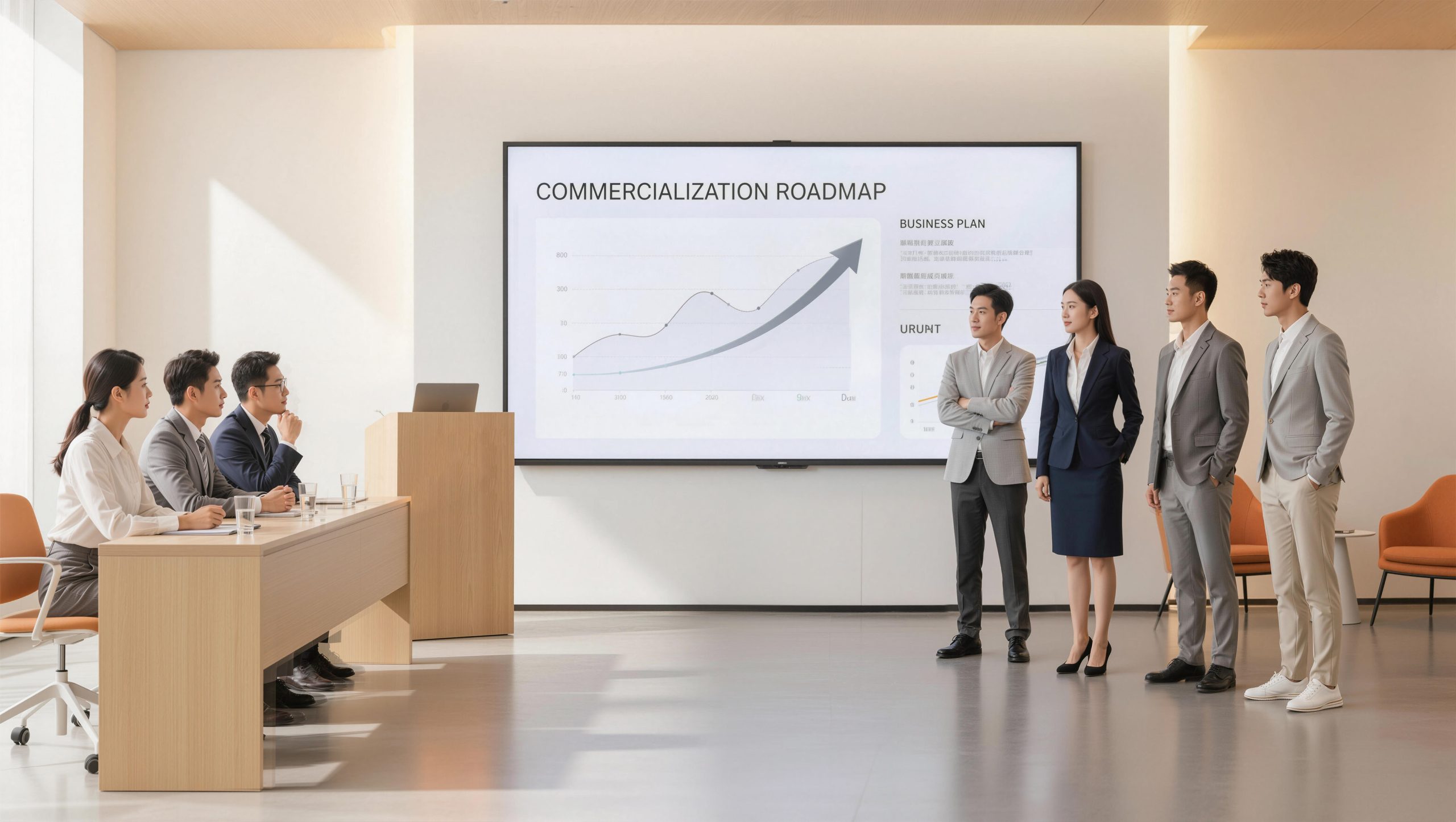
Stage 4: Multidimensional Evaluation (Days 33–40)
Score entries on technical merit, commercial potential, and innovation, then select winning teams to advance to commercialization.
Stage 5: Performance Milestones & Commercialization (Days 41–120)
Winning teams sign performance-based agreements. Once they meet agreed commercial targets, such as API call volume or customer numbers, within the specified timeframe, their solutions can launch on the ecosystem marketplace and begin earning revenue shares.
Evaluation Matrix
| Evaluation criterion | Weight | Scoring criteria | Key metrics |
|---|---|---|---|
| Technical execution | 35% | Code quality, architecture, performance optimization | Scalability, response time, stability |
| Business value | 35% | Pain points addressed, market size, monetization potential | Projected ROI, target customer base |
| Innovation | 20% | Novelty of solution, technical innovation | Differentiation, patent potential |
| User experience | 10% | Interface design, ease of use, documentation completeness | Learning curve, integration effort |
Ecosystem Marketplace
Ecosystem Plugin Marketplace
Bring innovations to market and build a sustainable developer ecosystem with revenue-sharing incentives.


Plugin Categories
- Operational Efficiency Route optimization, automated dispatch, and intelligent sorting
- Customer Experience Real-time tracking, scheduled delivery, and electronic proof of delivery
- Data Analytics Operational reports, BI dashboards, and predictive models
- Industry Solutions Pharmaceutical cold chains, fresh food delivery, and cross-border logistics
- Security & Compliance Risk alerts, compliance checks, and anti-counterfeiting traceability
Monetization Models
- 70/30 Revenue Split:Developers receive 70% of revenue; the platform receives 30%
- Pay per Call:A fee for each API call (¥0.01–1.00)
- Subscription:Monthly or annual subscriptions (¥99–9,999)
- Freemium:Core features are free; advanced features are paid
- Custom Development:Bespoke services for enterprise clients

Quality Certification
Officially Certified
Plugins rigorously tested and code-reviewed by SF Express's technical team
Popular Picks
TOP 100
Ranked by installations, ratings, and usage
Security Assurance
Security Review
Two layers of protection: automated security scanning and manual review
Ongoing Updates
Regular Maintenance
Developers commit to ongoing updates and technical support
Listing Process
01Submit Application
02Code Review
03Security Testing
04Business Review
05Official Launch
Review period: 5–10 business days. Outstanding plugins may earn an “Officially Certified” badge and a featured spot on the homepage.
proposal
Implementation Plan and Budget
A detailed execution plan, budget allocation and risk management strategy.
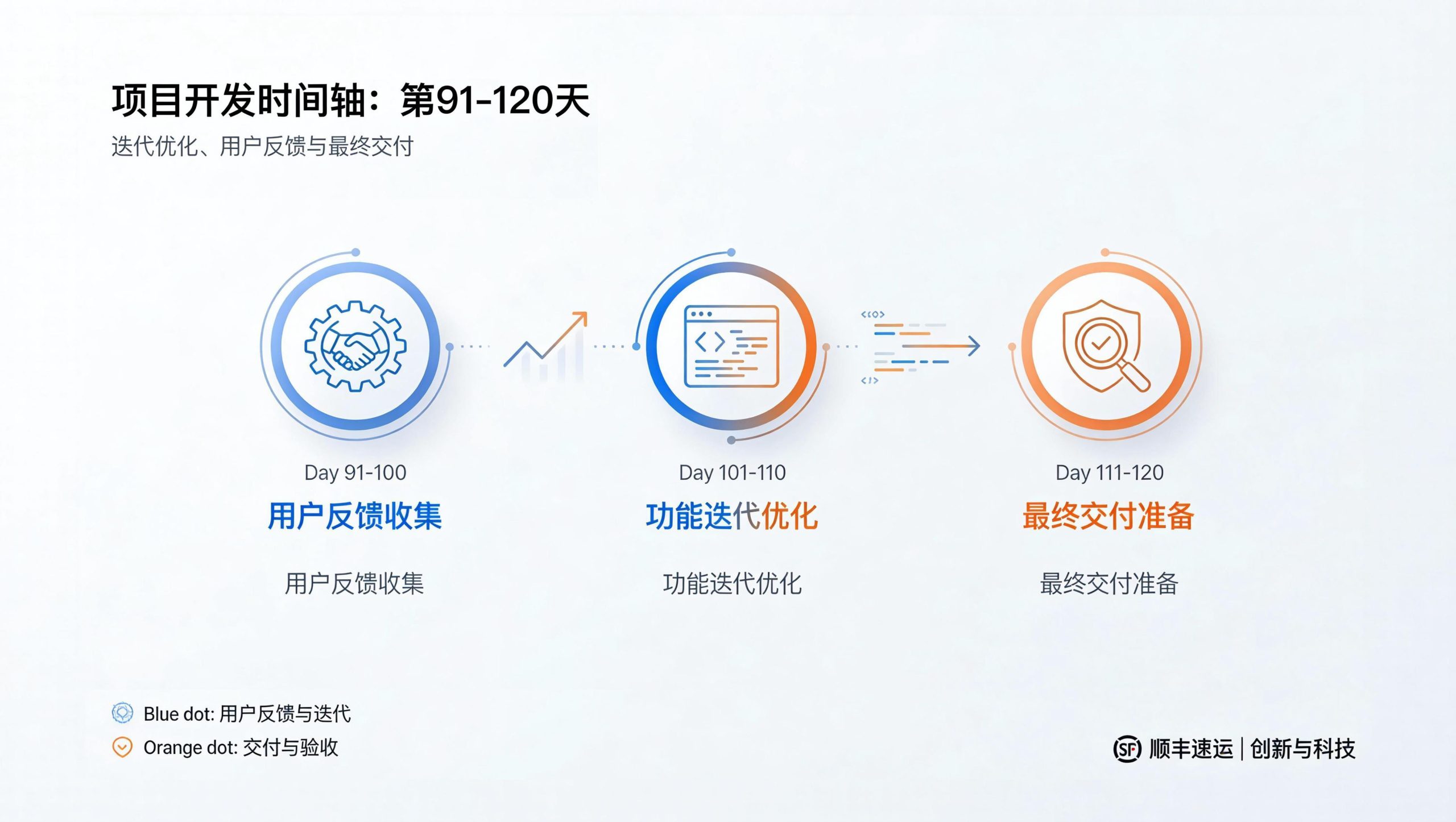
120-Day Implementation Plan
- Day 0-30:Set up the sandbox, complete API documentation and launch the developer community
- Day 31-60:Plan and run the first hackathon; recruit founding developers
- Day 61-90:Set performance targets for winning projects; develop and test plugins
- Day 91-120:Launch the ecosystem marketplace, publish the first plugins and validate the business model
Budget Allocation (Initial ¥3 Million)
- Sandbox Environment:¥800,000 (servers, security and operations)
- Hackathon:¥1 million (venue, prizes and promotion)
- Developer Incentives:¥800,000 (subsidies and revenue-share reserve)
- Marketing:¥300,000 (PR, community and content)
- People and Operations:¥100,000 (project management and community operations)

Risk Management Matrix
| Risk type | Specific Risk | Mitigation Strategy | Owner |
|---|---|---|---|
| Data security | Leakage of real data, exposure of customer privacy | Rigorous data masking, multi-tier access control, audit logs | Security Engineering team |
| Intellectual property | Unclear code ownership, patent disputes | Clear IP ownership agreements, early patent searches, legal review | Legal & Compliance team |
| API security | API abuse, DDoS attacks, malicious calls | Rate limiting, anomaly detection, blocklisting | Security Engineering team |
| Quality control | Inconsistent plugin quality undermining user experience | Rigorous review process, user ratings, refund policy | Product Quality team |
| Commercialization risk | Low plugin adoption, revenue share below expectations | Precise market positioning, free trial periods, marketing campaigns | Business Operations Team |
| Competitive Risk | Other logistics platforms adopt similar models | Build technical moats, strengthen ecosystem advantages, iterate rapidly | Strategic Planning Team |
Critical Success Factors
- Executive support and investment
- Active involvement from business teams and clear articulation of pain points
- Ongoing maintenance and optimization by the technical team
- An active, engaged developer community
Success Metrics
- North Star Metric:Number of Published Plugins
- Total API Calls (Monthly Growth Rate)
- Developer Registrations and Engagement
- Plugin Gross Merchandize Value (GMV)
Long-Term Vision
- Become the logistics industry’s leading innovation platform
- Build a developer ecosystem of more than 1,000 people
- Incubate 10+ solutions with unicorn potential
- Accelerate the logistics industry’s digital transformation
Deliverables
Key Deliverables
Comprehensive technical documentation, operating guidelines and contract templates to enable a fast, well-governed launch.

API Sandbox Guide
- Minimum Viable Technical Solution (MVP)
- Complete API Documentation and Endpoint Specifications
- SDKs and Code Examples
- Environment Setup and Quick-Start Guide
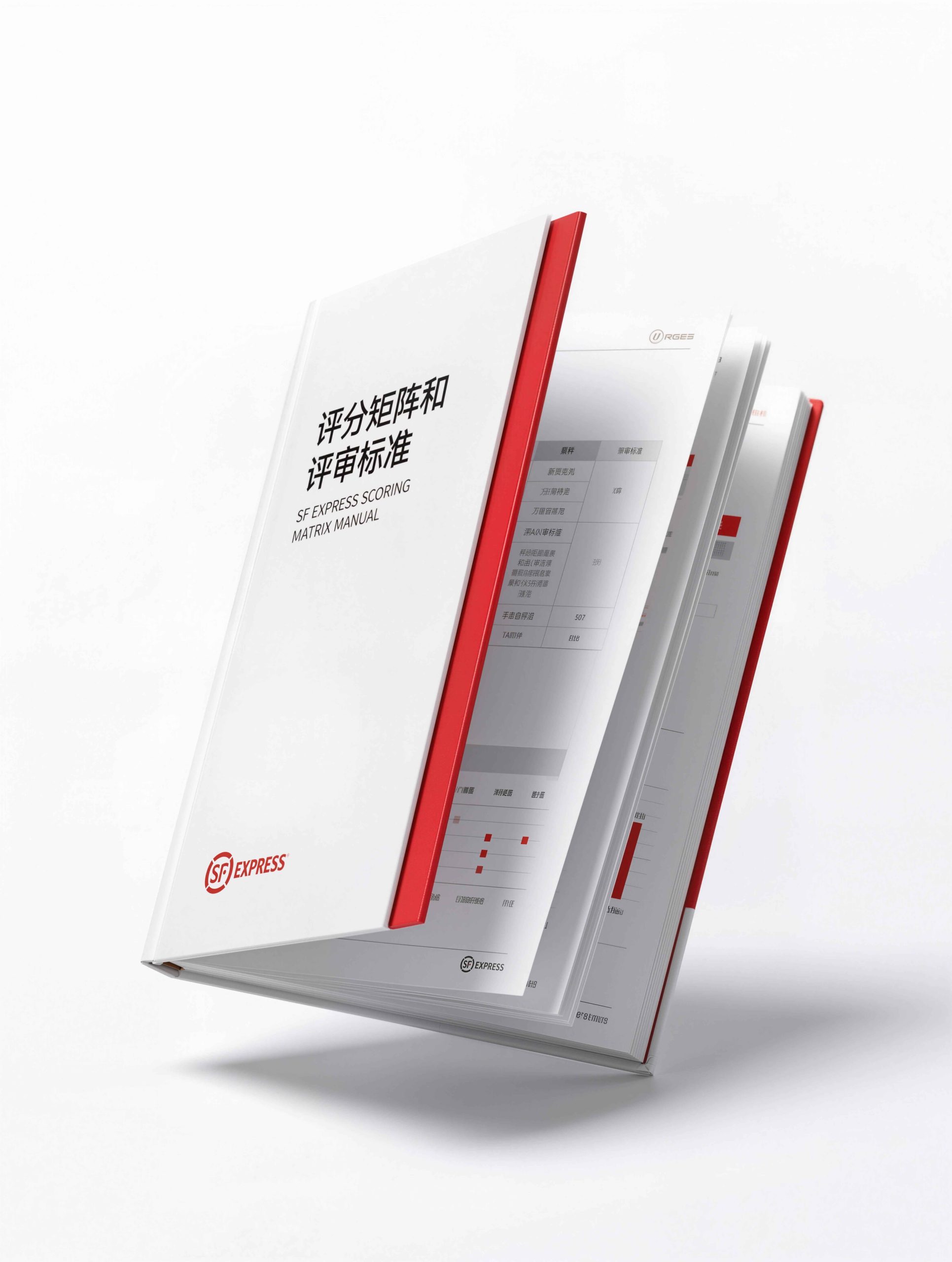
Hackathon Playbook
- End-to-end Event Operations
- Scoring Matrix and Judging Criteria
- Challenge Track Templates
- Mentorship Framework
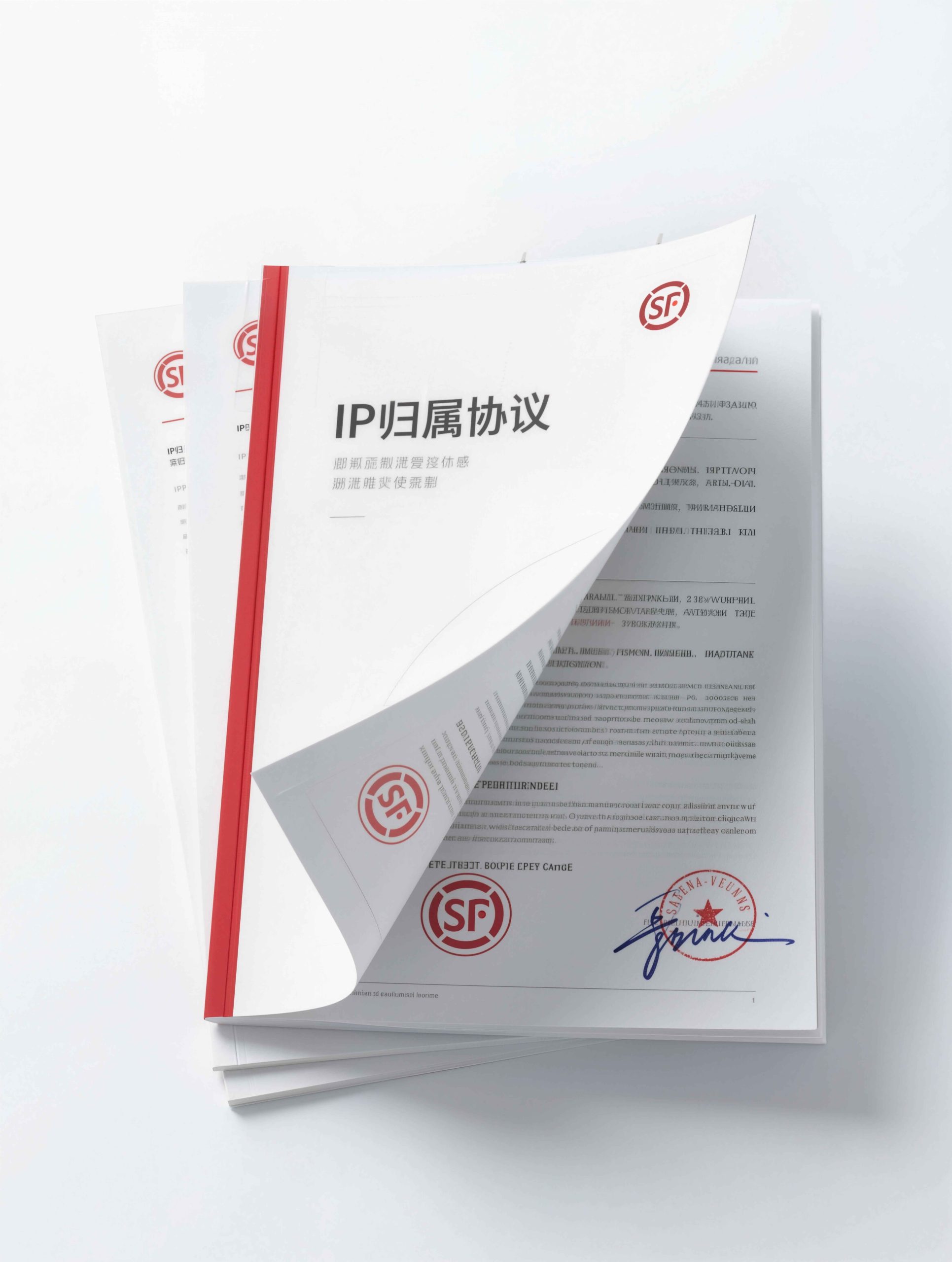
Commercial Contract Templates
- Ecosystem Marketplace Agreement (70/30 Revenue Share)
- IP Ownership Agreement
- Non-Disclosure Agreement (NDA)
- Service Level Agreement (SLA)
Value
Core value
Through an open API sandbox, quarterly hackathons and a plugin marketplace, the SF Express Logistics Innovators platform turns logistics challenges into market-ready products while building a sustainable developer ecosystem and innovation model.
150 co-created projects + 80 published plugins + 300% growth in API calls
Create a complete loop from challenge to experiment, plugin and marketplace launch
RELATED PROJECTS