












Set Boundaries for Illustration and Symbols
In visual system extensions, if illustration is still applied everywhere, the result is often that illustration starts doing the logo's job of recognition.

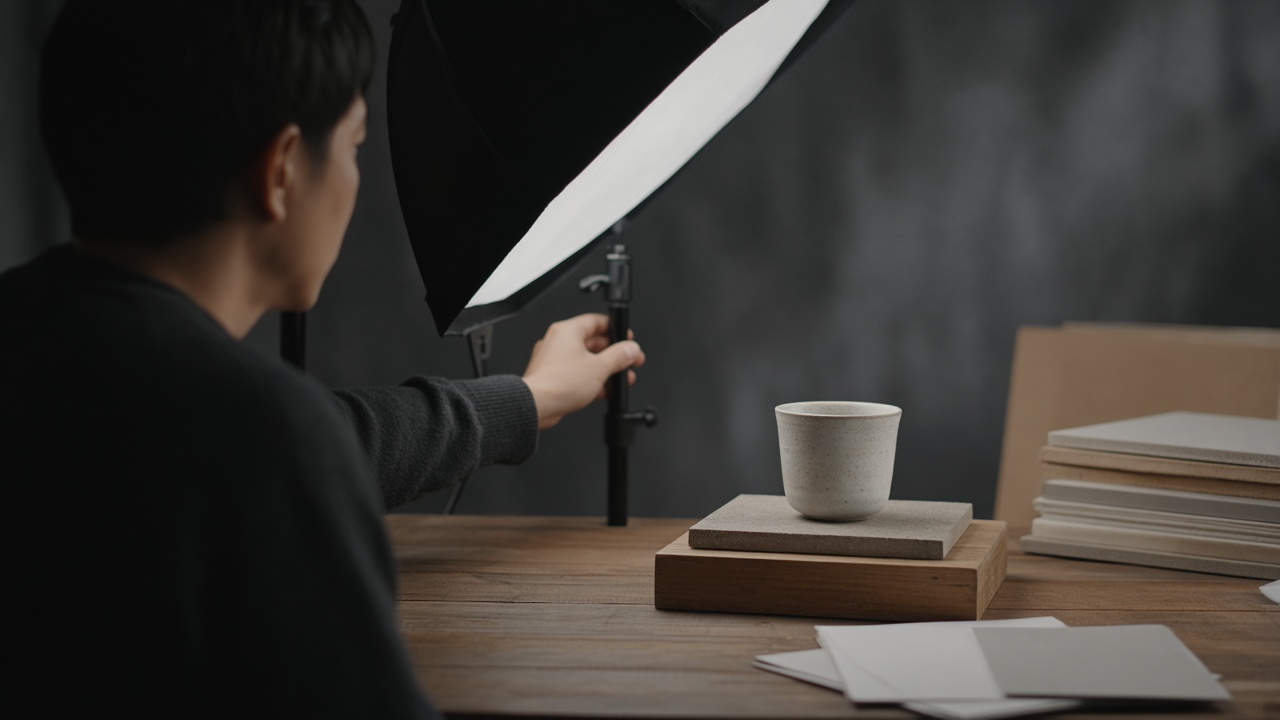
In imaging guidelines, when photography is still described through filters and settings, those settings stop working the moment the equipment changes, and the subject is never defined. The safer approach is for the rules to state what to shoot and what not to, and to lock that choice in with subject rules.
The first thing photography must stop is describing style through filters and settings. In imaging guidelines, language that persists leads straight to this: settings fail when the equipment changes, and the subject is never defined.
What carries on can be minimal. Only by keeping it minimal can you hold to rules that state what to shoot and what not to.
Rules state what to shoot and what not to. Until that happens, photography is still defined by filters and settings.
Ambiguity usually leaks in through well-meant additions. To accommodate more situations, people write photography back into filters and settings.
Every addition that doesn't revisit the core problem makes the boundary harder to enforce. That problem is: settings fail when the equipment changes, and the subject is never defined.
A negative list beats adjectives. Only when you spell out when photography can't be used will the team see that stating what to shoot and what not to is more than a slogan.
Keep the list short, short enough to be read in full before a shoot.
Subject rules exist to stop overreach, not to collect inspiration. Ideas that step outside the lines can exist, but they can't pass themselves off as the brand's photography.
The boundary holds when the design lead owns it and has the authority to say no.
When a boundary is crossed, don’t just revise one finished piece. Go back to the thematic rules and add the condition that was bypassed.
Then check again with the same question: without looking at the settings, would the photographer know what not to shoot?
From non-negotiable principles to tools usable on set, each layer answers one question. This keeps photography from being reduced to a style described through filters and settings.
This layer states what is non-negotiable in the photography.
This layer turns the photography into conditions that can be checked.
This layer defines what can change from one context to another.
This layer puts the photography in the hands of the people using it, and specifies exceptions.
Note: This diagram is a conceptual framework. It explains a way of thinking and is not statistical data. Source: Qingmei Future Insights.
Mark the moments when the photography is actually called for in the image guidelines. Don’t start by rewriting a style described through filters and settings.
Use thematic rules instead of longer explanations. Keep only what supports the principle that “the rules should say what to shoot and what not to shoot.”
Before the shoot, ask only: without looking at the settings, would the photographer know what not to shoot? If they can’t answer, it isn’t a decision yet.
Design lead. Photography without an owner will be quietly changed when conflicts arise.
In visual system extensions, if illustration is still applied everywhere, the result is often that illustration starts doing the logo's job of recognition.
In an interface or film, adding motion simply because something can move usually interrupts reading without conveying anything new.
If icon design focuses only on creating an attractive set of symbols, the icons may still need labels to make sense, or people may interpret each one differently.