


















Qingmei Future Insights
The AIGC Revolution in Advertising Creative: Reshaping the Industry Ecosystem
The AIGC Revolution in Advertising Creative: Reshaping the Industry Ecosystem
The advertising creative industry is undergoing a once-in-a-century transformation. The explosive growth of AIGC is overturning the underlying logic of traditional creative production: Midjourney compresses visual creative from weeks of production to seconds of generation; ChatGPT turns copywriting from a specialist skill into a tool anyone can use; Runway makes video production low-cost rather than high-barrier; and Sora signals a new era for ad film production. Data show that the global AIGC advertising market surpassed US$5 billion in 2024 and is expected to exceed US$20 billion in 2025, with a compound annual growth rate of 150%. Coca-Cola has used AI to generate holiday ads, Nestlé to create product visuals, and BMW to produce automotive films: leading brands are proving that AIGC is industrial reality, not hype. Yet AIGC brings more than upgraded tools and greater efficiency. It is a systemic, revolutionary restructuring of how creative work is produced, of the industry value chain, of talent capability models and of the competitive landscape. This is advertising’s historic turning point from the industrial age to the intelligent age.
The Strategic Restructuring of Creative Production

The evolution of AIGC reflects a deepening understanding of the nature of creativity and a fundamental shift in the content production paradigm. The traditional manual model of “inspiration – handcrafting – repeated refinement” is giving way to an AI-assisted model of “algorithmic generation – rapid iteration – output at scale”. In this transition, AIGC is no longer merely an aid to creative execution; it is a systemic revolution in productivity and an exponential expansion of creative supply that must be planned from the very top of advertising strategy.
At its core, modern AIGC-driven creativity redefines the logic of creative production and value creation. Traditional advertising creative relies on the talent and expertise of creatives to produce distinctive content: creativity is scarce, production cycles are long, costs are high and scaling is hard. AIGC-driven creativity uses algorithmic training and data learning to generate vast numbers of content variants: creativity shifts from scarce to abundant, from slow to instant, from costly to cheap, from artisanal workshop to intelligent factory. This shift requires advertisers to evolve from simply buying creative services to mastering AIGC productivity and building and running their own intelligent creative factories.
Fundamentally Redefining the Logic of Creative Value

In the AIGC era, the meaning of creative value and the criteria for judging it are changing profoundly, and the industry needs a new value system and evaluation framework.
The dissolution of creative scarcity is reshaping how value is assessed. In traditional advertising, creativity was a scarce resource: great creative talent was hard to find, inspiration could not be summoned at will, and standout work was limited. Scarcity gave creativity high value and pricing power. AIGC breaks that scarcity: anyone can generate ideas with AI tools, dozens of options can be produced in minutes, and creative supply shifts from scarcity to surplus. When producing ideas is no longer scarce, the criteria for creative value shift from “can it be produced” to “quality of output” and “strategic depth”. As one 4A agency director put it: clients used to pay for “being creative”; now they pay for “good strategy”, and the value of pure creative execution has been sharply compressed.
Blurred originality is challenging traditional notions of copyright. Traditional creative work emphasizes originality: ideas conceived from scratch, unique expression, clear authorship. The originality of AIGC creative is hard to define: AI generates output from training on massive datasets, results may resemble training material, and different people using the same prompt may get similar results. This challenges the traditional copyright system. One brand’s AI-generated ad visual was accused of resembling an artist’s work, sparking a copyright dispute and exposing the gray areas of copyright in the AIGC era. The industry urgently needs new copyright rules and value-attribution standards suited to AIGC.
Greater replicability of creativity is changing competitive barriers. The core barrier for traditional agencies was creative capability: top creative talent, proprietary creative methodologies and years of accumulated experience, all hard to replicate quickly. AIGC makes creative capability replicable: great prompts can be shared openly, creative methods can be standardized, and AI tools are available to all, eroding creative barriers. Competitive advantage shifts from “can you create” to “creative strategy” and “systems integration”. One creative hotshop realized that when everyone can make images with AI, the core competency lies in strategic understanding of the brand and deep consumer insight, and purely execution-focused creative firms face an existential crisis.
Speed is emerging as a new dimension of competition. Traditional advertising competition centered on quality (is the idea brilliant, is the execution polished), with relatively relaxed demands on speed. In the AIGC era, speed becomes a key competitive dimension: reactive marketing requires responses within hours, market shifts demand rapid creative adjustments, and A/B testing needs large volumes of assets produced quickly. Speed and quality are no longer at odds but coexist; AIGC makes “fast and good” possible. As one brand marketing lead put it: when selecting agencies in the AIGC era, the weighting for responsiveness has risen from 20% to 50%, and suppliers able to deliver usable creative within two hours are winning more opportunities.
The Paradigm Shift in Creative Thinking
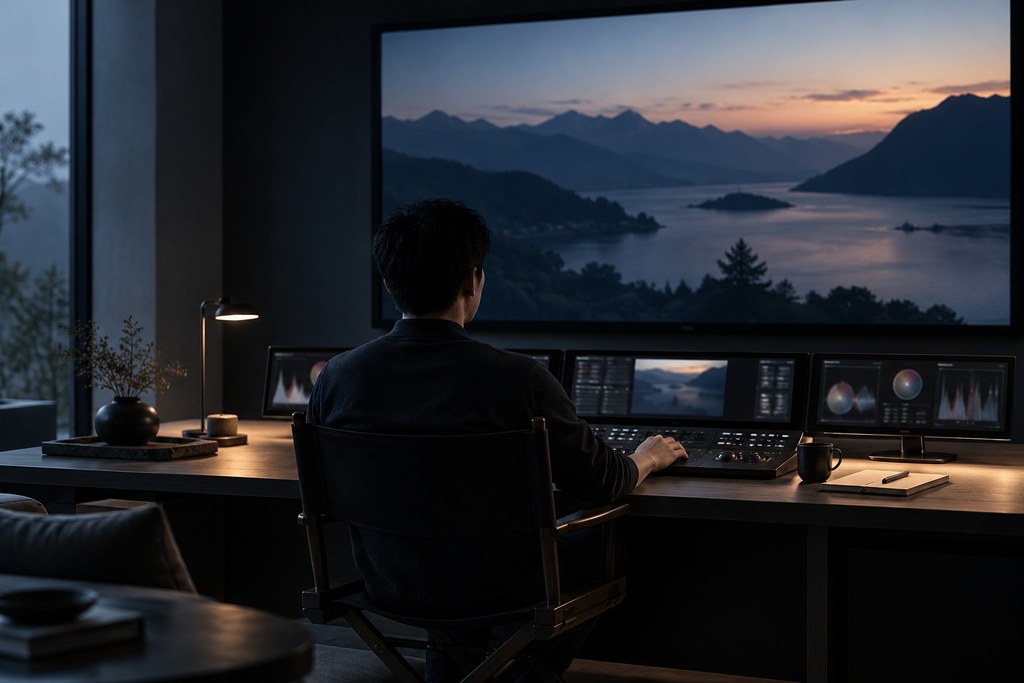
AIGC demands that creative professionals establish entirely new thinking patterns and workflows—transitioning from traditional creative thinking to human-AI collaborative direction. Creatives must evolve from hands-on makers into strategic directors.
The role upgrade from craftsperson to creative director. Traditional creatives are craftspeople—writing every copy by hand, designing every layout, editing every frame—with value measured in execution excellence. In the AIGC era, creatives become directors: they don't execute directly but guide AI execution, they don't create hands-on but control direction and quality, elevating from skilled craftspeople to strategic directors. This role transformation demands a fundamental reskilling—from Photoshop proficiency to prompt engineering, from manual drawing skills to aesthetic judgment, from execution speed to strategic thinking. One senior designer reflected: "Twenty years of Photoshop mastery no longer matters in the face of AIGC, but understanding beauty and brand control have become far more critical."
Methodological revolution from linear creation to iterative experimentation. Traditional creative workflows are linear—establish direction, invest significant time refining, strive for success on the first attempt. AIGC enables rapid iterative testing—quickly generate ten directional variations with AI, test and filter at low cost to find the optimal approach, then deep-dive on refinement. Creative methodology shifts from "slow work, fine results" to "rapid testing and iteration." One creative team adopted AIGC iteration methods, presenting thirty preliminary concepts at the pitch stage rather than the traditional three polished proposals, dramatically expanding client choice and doubling their pitch-to-win rate.
Work mode transformation from solo creation to human-AI collaboration. Traditional creativity emphasizes individual completion—one designer independently executes design, one copywriter independently writes copy. In the AIGC era, creativity becomes human-AI collaborative: humans provide creative direction and strategic thinking, AI handles execution and variant generation, humans filter and refine AI output, forming a closed loop of collaborative creation. This collaborative mode requires creatives to develop new capabilities: writing prompts to direct AI, evaluating and filtering AI output, refining and optimizing based on AI foundations. One advertising firm now requires all creatives to master at least three AIGC tools, with human-AI collaboration becoming standard practice.
Decision-making evolution from experience-driven to data-driven. Traditional creative decisions rely on intuition—"this concept feels right," "this style is popular by experience." The AIGC era enables data-driven approaches: AI generates multiple versions for small-scale testing, data feedback guides optimization direction, algorithms predict creative performance. Creativity shifts from subjective art toward science and art combined. One brand using AIGC and data-driven creative workflows increased testing volume from ten concepts monthly to five hundred, with data-guided insights boosting viral creative output rates by five-fold.
Business Model Innovation and Reconstruction

AIGC technology has spawned new business models and service formats, threatening a transformative restructuring of traditional advertising agencies' profit logic and service delivery.
Fee structure transformation from project-based to subscription models. Traditional agencies bill by project—clients initiate projects, agencies quote and execute, settlement occurs upon completion, with one-time payment structures. AIGC enables subscription models: agencies provide AIGC creative platforms, clients subscribe monthly for unlimited use, AI generates drafts that human teams refine into finished work, creating continuous service and recurring revenue. One creative company launched a "creative subscription service" at ¥9,999 monthly, delivering fifty AI-generated concept drafts plus ten human-refined versions per month; within three months they secured eighty subscription clients, scaling annual revenue from ¥3 million under project fees to ¥9 million through subscriptions.
Cost structure transformation from labor-intensive to technology-driven. Traditional agencies are labor-intensive—creative talent as core asset, labor costs exceeding 70 percent, scaling tied to headcount growth. AIGC-driven companies are technology-intensive: the AIGC platform becomes the core asset, technology investment rises, scaling depends on technology not headcount. This structural shift enhances business model scalability. One digital marketing firm invested ¥5 million building an AIGC creative platform, achieving ten-fold creative output with only 20 percent headcount increase, sharply lowering marginal costs and significantly boosting profitability.
Service model evolution from full-service offerings to modular capability components. Traditional agencies deliver full-service solutions—strategy through creative through execution, packaged comprehensively. AIGC enables capability componentization: decompose creative abilities into standalone modules (AI copywriting generation, AI image services, AI video production), clients purchase and combine modules as needed, similar to SaaS product delivery. One creative company released creative capability APIs, allowing clients to integrate AI creative functions into their own systems, opening new revenue streams and service models.
Market expansion from B2B services to B2B2C platforms. Traditional agencies serve enterprise clients (B2B)—providing creative services to brands. AIGC enables B2B2C platform models: agencies build AIGC creative platforms where enterprise clients serve their consumers, connecting brands directly to consumers. One company launched an "AI Creative Open Platform" where brands can offer consumers AI-customized creative services (users upload photos, AI generates personalized posters), elevating the platform from service provider to ecosystem operator.
Systemic Restructuring of the Industry Ecosystem
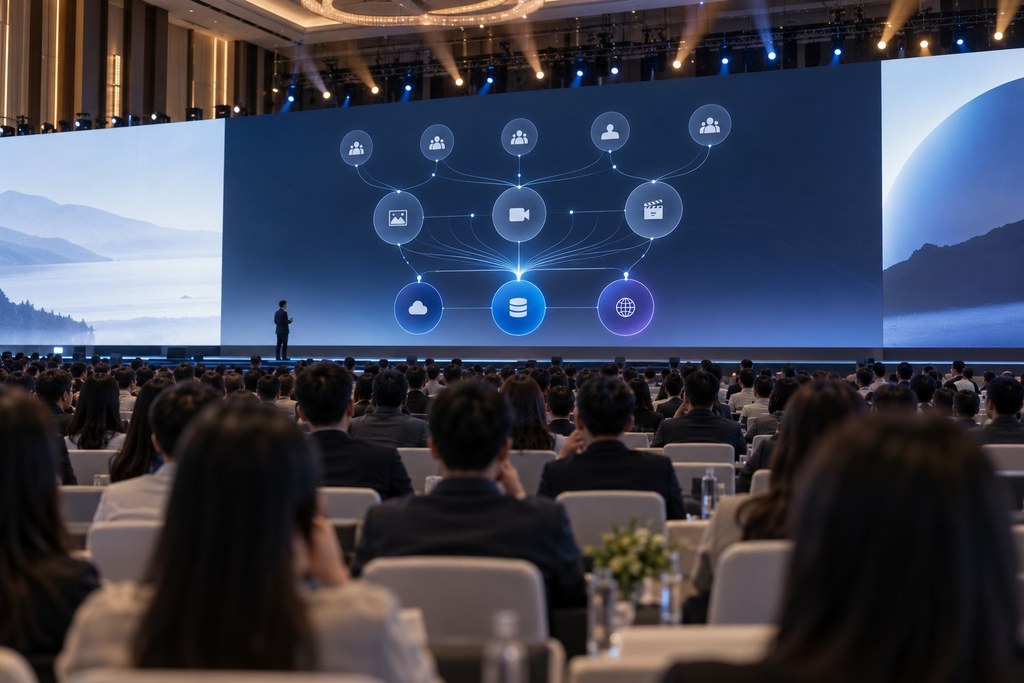
AIGC isn't merely changing individual firms—it's reshaping the entire advertising industry's value chain, division of labor, competitive landscape, and ecosystem structure.
Creative company differentiation and consolidation accelerate industry reshuffling. AIGC's impact varies dramatically across creative firm types: pure execution-focused firms face existential threats (basic design, standard video production displaced by AI), strategy-focused firms gain leverage (AIGC amplifies creative capacity), tech-forward firms rise (possessing AIGC mastery). The industry is undergoing major consolidation; one advertising association reports that 70 percent of 2024 creative firm closures were traditional execution-focused agencies, while 60 percent of newly established firms are AIGC-driven.
Fundamental restructuring of talent needs. Traditional advertising demands designers, copywriters, editors and other execution-focused roles. The AIGC era radically reshapes demand: execution roles decline (AI-replaceable), strategy roles rise (AI requires human direction), tech roles surge (prompt engineers, AI trainers, AIGC product managers). One recruitment platform reports 2024 advertising industry AI-related job growth of 300 percent, while traditional execution roles fell 40 percent, creating structural supply-demand imbalance in talent markets.
Tech companies' forceful market entry dissolves industry boundaries. Traditional advertising's supply chain is relatively closed: advertisers, agencies, production firms, media platforms with clear role definition. In the AIGC era, tech firms aggressively enter: ByteDance launched Jingmeng AI Creative Platform, Alibaba launched Tongyi Wanxiang, Baidu launched Wenxin Yige; tech giants leverage AI capabilities to serve advertisers directly, eroding traditional agencies' middleman role. Industry boundaries blur and cross-border competition intensifies.
Industry value distribution realignment. Traditionally, creative agencies captured value chain premiums (through creative capability pricing), production sits midstream, media placement downstream. AIGC restructures distribution: creative execution value declines (AI completes low-cost), strategic consulting value rises (non-replaceable), technology platform value emerges (those mastering AI capture premiums). One industry report shows AIGC reduced creative execution's value share from 40 percent to 15 percent, while strategic consulting rose from 30 percent to 45 percent, consolidating value upstream.
Conclusion
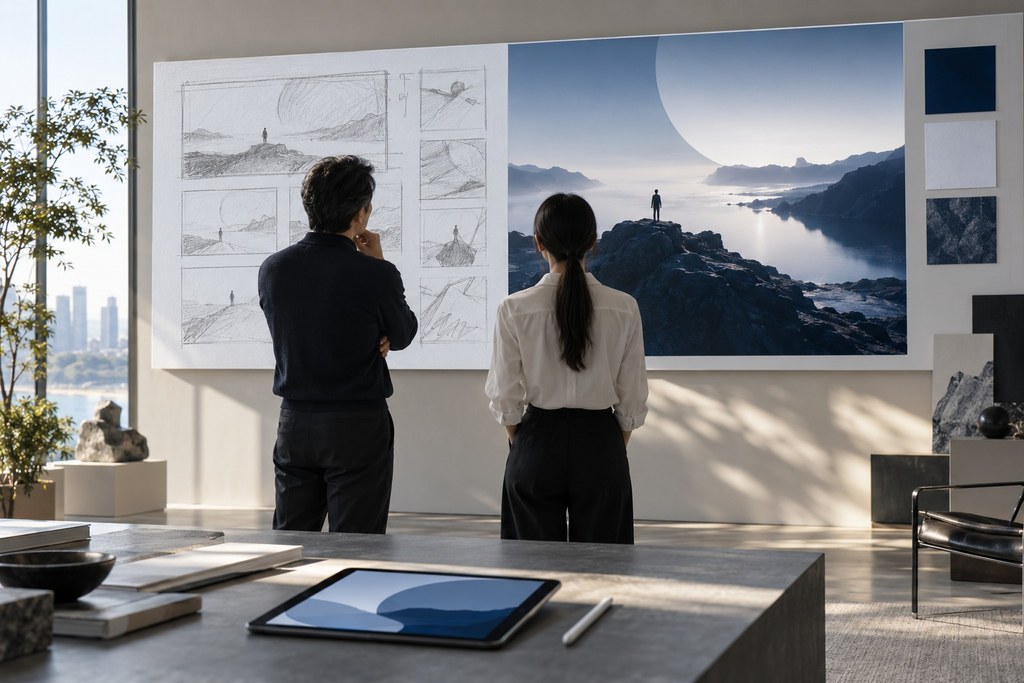
The AIGC-era advertising creative revolution isn't gradual technical iteration—it's systemic disruption and transformation of industry fundamentals, production methods, business models, and ecosystem structure. This transformation's depth rivals the internet's impact on traditional media, mobile's displacement of desktop, marking the most dramatic paradigm shift in advertising's hundred-year history.
For the advertising industry, AIGC presents both existential challenge and growth opportunity. Companies that actively embrace transformation and upgrade strategically are gaining renewal through the AIGC wave—amplifying creative capacity through technology, winning market share through speed, opening growth avenues through new models. Those clinging to tradition and resisting change face accelerating obsolescence: execution work devoured by AI, clients migrating to emerging firms, talent flowing to innovators. AIGC draws a line: one side holds transformation-embracing survivors and leaders; the other holds change-resistant strugglers and the obsolete.
For creative professionals, AIGC catalyzes capability revolution. Traditional skills depreciate rapidly while new capabilities command premiums. Creatives who proactively learn AIGC tools, build human-AI collaboration abilities, and elevate strategic thinking are achieving career and income breakthroughs. Those clinging to traditional skills, refusing new tools, and executing without thinking face declining competitiveness and unemployment risk. AIGC doesn't steal jobs—it eliminates those who don't evolve and elevates those embracing change.
For the broader ecosystem, AIGC is restructuring rules and competitive dynamics. Lower entry barriers intensify competition, technology becomes the new moat, industry boundaries blur, novel players emerge constantly. This ecosystem restructuring brings chaos and uncertainty alongside opportunity and possibility. Participants who navigate change strategically, build core capabilities, and foster ecosystem collaboration will occupy advantageous positions in the new landscape.
Here's the transformation code for AIGC-era advertising creativity: let technology amplify rather than replace creativity, let AI be humanity's creative collaborator not competitor, let transformation become industry upgrade not catastrophe. Advertising's future belongs neither to AIGC-resistant traditionalists nor to blindly tech-worshipping machine believers, but to wisdom practitioners finding balance between art and science, humans and AI, tradition and innovation. Only through embracing change, proactive evolution, and continuous innovation can the industry survive this historic transformation—or even become its defining leader.