


















Qingmei Future Insights
Globalizing Luxury: Balancing Heritage and Innovation in AI-Enhanced Storytelling
The globalization of luxury brands presents a unique paradox: how can a brand embrace digital innovation while preserving a century of heritage? How can it achieve global reach while maintaining exclusivity? AI offers new answers to this challenge. Through intelligent storytelling strategies, luxury brands can convey their essence precisely across cultural contexts while creating a unique, personalized experience for every customer.
Reimagining Luxury Heritage for the Digital Age
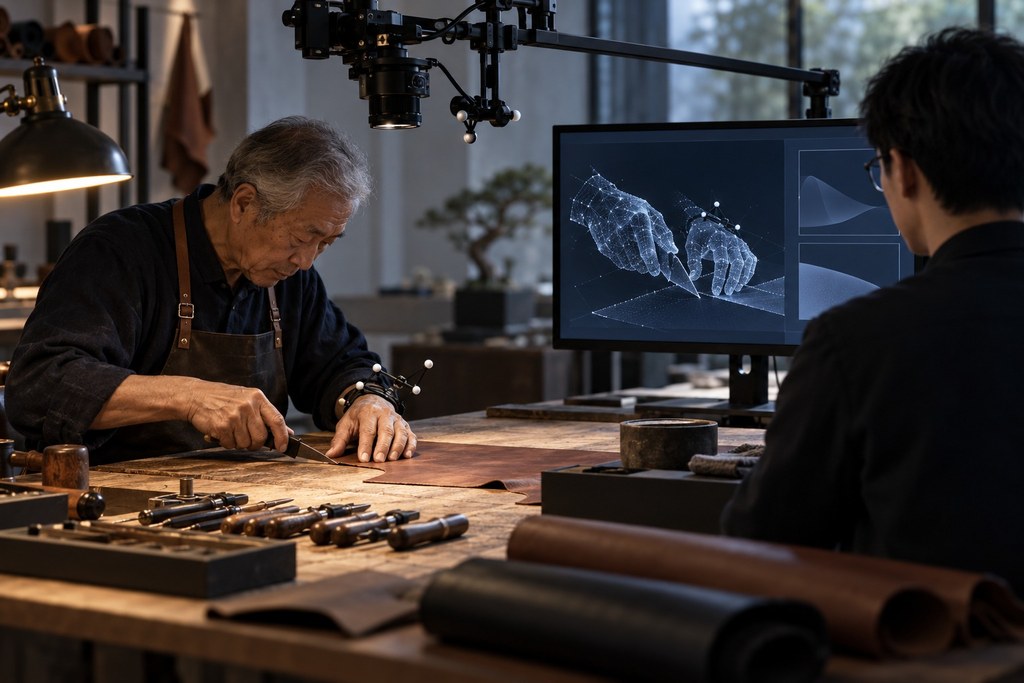
A luxury brand's heritage is not merely an accumulation of history but the core vessel of the brand's soul. In the AI era, the craftsmanship, cultural symbols and brand mythology refined over centuries face entirely new challenges of interpretation. Digitalization is not a betrayal of tradition, but the inevitable path to giving heritage new vitality for a new age. Successful luxury brands are using AI to turn static historical archives into dynamic brand assets.
Digital preservation and transmission of craft knowledge becomes an urgent task. Many luxury brands' core competitiveness derives from generations of inherited artisanal techniques; this tacit knowledge faces extinction risk as master craftspeople depart. AI transforms masters' skills into transmissible digital assets through computer vision, motion capture, and knowledge graphs. This transformation isn't mechanical replication but deep understanding and systematic presentation of craft essence.
Intelligent activation of archival resources unleashes enormous creative potential. Design drawings, historical photographs, and brand stories accumulated by luxury brands gain new life through AI. Machine learning can identify classic elements in historical designs; generative AI can create new design proposals based on brand DNA. This innovation doesn't emerge from nothing but is deeply rooted in the brand's historical soil.
Contemporary translation of cultural capital requires delicate balance. Luxury brands often embody specific cultural values and lifestyles; these soft assets require careful handling during globalization. AI helps brands understand receptivity and resonance points across cultural contexts, enabling appropriate localized adaptation while maintaining the brand's cultural core.
Innovative Architecture of AI Narrative

Scaled realization of personalized narrative breaks through luxury brands' traditional dilemma. Historically, luxury meant uniqueness and scarcity, with personalized service covering only the most elite clientele. AI enables brands to create unique brand stories for every customer, using data analysis to understand individual preferences and generate customized content and experiences. This personalization isn't superficial name customization but deep emotional connection and value alignment.
Multi-sensory narrative experiences redefine what luxury means. AI processes not just visuals and text, but sound, scent, and tactile dimensions. Through virtual reality, augmented reality, and holographic projection, brands create immersive experiences that transcend physical constraints. This transforms consumers from mere owners into active participants in the brand story.
Real-time narrative adjustment ensures brand relevance. Traditional brand communication is unidirectional and static, while AI-powered narrative systems adapt content and form based on live feedback. By analyzing social sentiment, market trends, and cultural moments, brand narratives stay synchronized with the times—remaining fresh while preserving their timeless essence.
Intelligent cross-cultural storytelling solves a core challenge of globalization. Luxury brands must tell stories that are unified yet differentiated across cultural markets. Through deep learning, AI understands differences in cultural symbols, values, and aesthetic preferences, helping brands craft universal narratives that cross cultural boundaries while retaining necessary local character.
The Dynamic Balance of Innovation and Heritage

The fusion of technological innovation and craft tradition creates new dimensions of value. 3D printing, AI-driven design, and new materials bring innovation opportunities, but the key challenge is preserving the soul of craftsmanship while embracing technology. Successful brands position AI as the artisan's assistant, not replacement, creating work that surpasses tradition through human-machine collaboration.
A new definition of sustainable luxury changes the logic of value creation. Modern consumers, especially younger generations, demand environmental and social responsibility from luxury brands. AI helps brands optimize supply chains, reduce waste, and improve resource efficiency, unifying luxury with sustainability. Circular economy principles make "timelessness" not just a promise of quality, but a responsibility to the planet.
Precise control of innovation rhythm maintains brand scarcity. Luxury brands must balance freshness with exclusivity. AI uses predictive analytics to help brands calibrate the timing and intensity of innovation, ensuring each innovation strengthens rather than dilutes brand value. This precision isn't conservatism—it's strategic restraint.
Creating digital scarcity opens new value space. NFTs, digital collectibles, and virtual fashion provide new sources of scarcity for luxury brands. AI not only supports the creation of these digital assets but, more importantly, establishes the technical infrastructure to verify authenticity, track ownership, and manage scarcity.
Intelligent Global Market Coordination

Granular market segmentation enhances global strategy precision. Through massive data analysis, AI identifies segments traditional methods miss. This segmentation considers not just demographics but psychological traits, lifestyles, and values. Luxury brands can craft precise strategies for each segment.
Intelligent supply chain optimization balances global efficiency with local responsiveness. Luxury supply chains are exceptionally complex, involving rare materials, precision craftsmanship, and rigorous quality control. AI predicts demand, optimizes inventory, and coordinates logistics while maintaining quality standards. Blockchain technology ensures supply chain transparency and traceability.
Dynamic pricing optimization considers complex market factors. Luxury pricing involves more than cost and margin—it encompasses brand positioning, market psychology, and competitive dynamics. AI analyzes exchange rate fluctuations, tariff changes, and competitor moves in real time, crafting optimal pricing strategies for different markets.
Intelligent brand protection addresses the counterfeit challenge. Counterfeiting is a chronic luxury brand affliction. AI employs image recognition, blockchain authentication, and consumer behavior analysis to establish comprehensive brand protection. This protection isn't passive defense but proactive offense, curbing counterfeits at the source through consumer education and channel management optimization.
Strategic Vision for the Future

Luxury brand building in the metaverse opens new growth space. Virtual worlds aren't replicas of reality—they're entirely new creative spaces. Luxury brands must rethink their purpose and value creation in virtual environments. As the foundational technology of the metaverse, AI helps brands create distinctive virtual experiences and digital assets.
Ecosystem co-evolution transcends single-brand limitations. Luxury brands increasingly recognize that going it alone cannot address complex challenges. By building ecosystems that include suppliers, designers, artists, and technology companies, brands gain sustained innovation momentum. AI serves as the ecosystem's connector and coordinator, facilitating collaborative value creation.
Establishing cultural leadership secures long-term brand position. Luxury brands are not just product providers but cultural creators and value leaders. By supporting the arts, advancing sustainability, and championing diversity, brands build influence beyond commerce. AI helps brands understand and anticipate cultural trends, enabling leadership in cultural dialog.
Luxury brand globalization stands at a critical inflection point. AI isn't disrupting tradition—it's an opportunity to revitalize heritage in the digital age. Successful brands will elegantly balance heritage with innovation, global with local, technology with humanity. In this process, AI isn't a cold tool but an intelligent partner helping brands better understand and serve human needs.
Conclusion
Luxury brand globalization is a delicate dance between tradition and innovation, requiring exquisite balance to navigate heritage value and technological change. Our exploration reveals that AI isn't a threat to luxury tradition but an enabler making brand stories more vivid, experiences richer, and connections deeper. Successful luxury brands understand how to amplify brand magnetism with AI while preserving the purity of craft spirit and cultural depth.
In practice, luxury brands must apply AI with precision and care, ensuring technology serves brand value rather than diluting uniqueness. Personalization should not compromise exclusivity; digitization should not diminish mystique. We must recognize that true luxury lies in emotional value and cultural meaning—the irreplaceable core that no technology can supplant.
Looking ahead, as new generations rise and technology evolves, luxury brands will encounter more innovation opportunities. From virtual fashion to NFT art, from metaverse experiences to AI-customized services, the definition of luxury is being rewritten. Let us witness this exhilarating era as luxury brands safeguard heritage while pioneering the future, harnessing AI to tell brand legends both timeless and ever-new.