


















Qingmei Future Insights
Creative breakthrough in brand co-branding design
Brand co-branding has become an important strategy for contemporary business innovation, stimulating new creative sparks through cross-border cooperation. From the collision of luxury goods and street fashion brands to the collaboration between technology brands and artists, joint design breaks traditional industry barriers and creates surprising products and experiences. This cooperation model can not only expand brand influence, but also explore infinite possibilities of design through resource complementation and creative integration.
Strategic reconstruction of joint logic

Brand collaborations have evolved from simple commercial partnerships into a strategic mechanism for creating value. Traditional collaborations often stopped at placing two logos side by side. Modern collaboration design aims for fusion and innovation at the level of brand DNA. This is not a mechanical pairing of two brands, but a new value proposition that extends beyond the boundaries of either. A successful collaboration unlocks the latent energy of both brands, producing a result greater than the sum of its parts.
The underlying mechanism of co-creating value decides whether a collaboration succeeds. A true collaboration is not a simple pooling of resources, but the pairing and amplifying of core strengths: one partner's design sensibility with another's technical depth, traditional craft with modern technology, local culture with a global outlook. This requires both brands to find common ground in philosophy, audience, and market position, while each keeps what makes it distinct.
Reshaping user perception opens new market space. Collaborations break users' fixed perceptions of a brand and create surprise and freshness. When a luxury brand partners with street culture, or a tech brand works with an artist, the contrast sparks curiosity and conversation. Collaborations have become an important way for brands to break out of their circles, reach new users, and refresh their image.
Deliberate scarcity reinforces the value of a collaboration. Limited editions, time-limited sales, and exclusive channels are core to co-branded design. Scarcity creates urgency and distinctiveness, and, more importantly, gives products collectible value and social currency. Design should reinforce this scarcity and distinctiveness in both the product and the marketing strategy.
Rethinking the Method of Creative Fusion
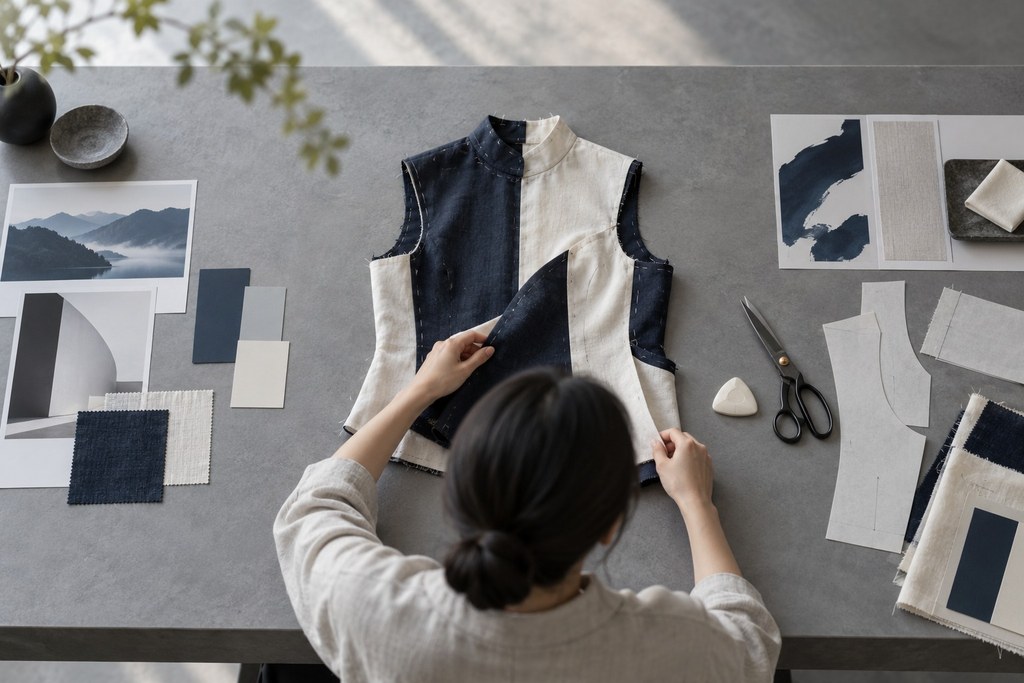
Deconstructing and recombining design language creates new visual experiences. A successful collaboration does not simply place two brands' elements side by side. It breaks down each brand's design DNA to find where they meet and where there is room to innovate. Interwoven color systems, a dialog between graphic languages, and contrasting materials and textures produce visuals that feel both familiar and new.
Interwoven narratives create a richer brand story. Every brand has its own history, culture, and story, and a collaboration must find where the two storylines meet. This isn't a forced graft, but a search for shared values or complementary perspectives that yields a more layered, deeper narrative.
Cross-disciplinary functional innovation pushes past product boundaries. A collaboration can go beyond visuals to create breakthroughs in function and technology. A sportswear brand's performance fabrics paired with a fashion house's tailoring, or an electronics brand's smart technology brought into a heritage brand's everyday use: innovation at this level creates entirely new value for users.
Reinterpreting cultural symbols gives collaborations deeper meaning. Co-branded design often brings together brands from different cultures, and the challenge is creating something new while respecting each. By distilling cultural essence, transforming its form and placing it in a contemporary context, co-branded design becomes a platform for cultural dialog and innovation.
Multidimensional User Experience Design

Precisely triggered emotional resonance amplifies a collaboration's impact. Co-branded design must accurately read the emotional needs and cultural identity of its audience. By understanding where two brands' audiences overlap and differ, design can create touchpoints that move both. Nostalgia meets trend, ideals meet reality, individuality meets belonging. These emotional tensions give co-branded products strong appeal.
Designing for shareability fuels word of mouth. Collaborations naturally spark conversation, and design should make the most of it. Create visuals built for social media, unboxing experiences worth sharing, and styling options that let people express themselves, so every user becomes a messenger for the brand.
End-to-end design of the experience journey creates a complete story. From building anticipation before launch, to creating a sense of ceremony at release, to delivering ongoing surprises during use, a collaboration needs a fully designed user journey. Every touchpoint should reinforce the collaboration's distinct value and create memorable, shareable moments.
Cultivating community culture deepens user connection. Successful collaborations build distinct fan communities, and design must give them identity markers, spaces to connect, and exclusive benefits. Through online communities, offline events, and membership programs, short-term buzz becomes a lasting community asset.
Innovative exploration of business models

New ways of sharing value make the partnership work for everyone. Co-branded design involves a complex division of returns across design investment, production cost, sales revenue, and brand equity. A new business model needs a fair, transparent way to share value, so that every party's contribution is properly rewarded and long-term collaboration has a solid foundation.
Coordinated channel strategy expands market reach. Co-branded products can draw on both partners' channels for broader coverage. But it takes careful planning: which channels sell exclusively, which launch simultaneously, and how online and offline work together. These decisions directly shape how a collaboration performs.
Precise pricing balances value and accessibility. Pricing a co-branded product must account for both brands' positioning, the target audience's purchasing power, and the product's scarcity. Pricing too high can limit market size; pricing too low can erode brand value. Getting it right requires in-depth market research and testing.
Smart IP management protects creative value. Who owns the new IP a collaboration creates, how it can be used, and how it is protected should be settled at the start. A flexible IP framework protects that value while leaving room for future extensions and development.
Forward-looking layout of future trends

Digital collaborations expand the boundaries of creativity. NFTs, virtual fashion, and digital collectibles open new creative space for brand partnerships. Free from physical constraints, digital collaborations allow bolder design, more flexible releases, and richer interaction.
The expression of responsibility of sustainable joint branding responds to the demands of the times. The joint development of environmentally friendly materials, joint practice of circular economy, and shared social responsibility have made sustainability the new theme of the joint brand. This kind of joint branding not only creates commercial value, but more importantly, promotes the sustainable transformation of the industry.
AI-driven co-branding makes design more efficient. AI can analyze the design DNA of two brands to generate new fusion concepts, predict market response to optimize the product mix, and personalize offerings for different users. AI has become a powerful tool for collaborative design.
Ecosystem thinking makes collaborations more valuable. Future collaborations may go beyond two brands to form creative ecosystems of brands, designers, artists, and users. With platform-based operations, modular design, and open innovation, a collaboration becomes an ecosystem that keeps creating value.
Collaboration design has become an important form of modern business innovation. It is more than a marketing tactic. It is a platform for creative expression, cultural dialog, and new value. Success requires strategic thinking, creative ability, and strong execution working together. As boundaries continue to blur, collaboration gives brands endless ways to reinvent themselves, create surprise, and connect with people.
Conclusion
The success of brand co-branding design lies in finding the intersection of values between the two parties and achieving a win-win situation in the creative collision. Through the discussion in this article, we realize that excellent joint design is by no means a simple logo superposition, but a deep integration of brand spirit and a breakthrough expression of creative concepts. It requires both parties to find a common innovative language while maintaining their respective DNA, and create design works that are both familiar and fresh.
In practice, brands need to choose partners carefully to ensure values fit and target audience complementarity. At the same time, creative breakthroughs in co-branded design should serve long-term brand strategy rather than short-term traffic effects. A successful co-branding can inject new vitality into the brands of both parties, expand the brand boundaries and create cultural phenomena.
In the future, as consumers' pursuit of innovative experiences continues to increase, brand co-branding will continue to evolve, extending from the product level to in-depth cooperation in experience, services and even values. Let us look forward to more co-branded designs that break the rules and lead the trend, bringing a steady stream of creative energy to the brand world.