


















Qingmei Future Insights
Brand Innovation Lab: An iterative testing model of twenty years of practice
Over the past two decades, the Brand Innovation Laboratory has developed from a novel concept to a core component of the modern enterprise innovation system. Its evolution has witnessed profound changes in the business environment and the continuous upgrading of innovation methodologies. From a simple brainstorming space at the beginning to a comprehensive innovation platform integrating artificial intelligence, big data analysis, user experience design and agile development, the brand innovation laboratory has become a key engine for enterprises to explore the future, test hypotheses, and incubate breakthrough products and services. The accumulation of practice over the past two decades has not only formed an increasingly mature iterative testing model, but more importantly, it has provided systematic methodological support for brands to maintain competitive advantages in a rapidly changing market environment. The core of this model is to transform innovative uncertainty into manageable risks and creative inspiration into commercial value through scientific experimental design, rapid prototype verification and data-driven decision optimization.
The historical context of laboratory evolution

The development process of the Brand Innovation Laboratory can be clearly divided into several important stages, each stage reflecting the characteristics of the technological level, business environment and innovative ideas at that time.
The early exploration stage (2005-2010) mainly focused on the innovative design of physical space and the creation of a creative culture. The laboratory during this period was more of a place to stimulate creativity, equipped with movable furniture, rich prototype materials, and various collaboration tools. The main function of the laboratory is to provide an innovation space for cross-department teams away from the daily work environment to generate new ideas through design thinking workshops, brainstorming sessions and user co-creation activities. Although the method at this stage is relatively simple, it lays an important cultural foundation for subsequent development.
The digital transformation phase (2010-2015) witnessed the widespread use of digital technologies in innovative experiments. The maturity of cloud computing, mobile Internet, social media and other technologies enables laboratories to better connect internal and external resources and achieve global collaborative innovation. Online prototyping tools, digital user testing platforms, and virtual collaboration environments have begun to become standard configurations in laboratories. At this stage, the laboratory began to pay attention to the collection and analysis of data, and user behavior data, market feedback data, technical performance data, etc. began to be systematically integrated into the innovation decision-making process.
The intelligent upgrade stage (2015-2020) is marked by the integration of artificial intelligence and machine learning technology. The laboratory began to use AI technology for trend prediction, user insight analysis, creative generation and effect evaluation. Natural language processing technology helps the laboratory extract insights from massive user feedback, computer vision technology supports rapid prototype recognition and user behavior analysis, and recommendation algorithms optimize the design of personalized innovative solutions. The laboratory at this stage is not only a place for innovation execution, but also an intelligent innovation assistant.
The ecological development stage (2020 to present) emphasizes the deep connection between the laboratory and the external innovation ecology. Open innovation, ecosystem cooperation, and platform-based operations have become the main features of this stage. The laboratory is no longer a closed space within the enterprise, but an open platform connecting customers, partners, entrepreneurs, and research institutions. Blockchain technology ensures the protection of intellectual property rights and fairness in value distribution, Internet of Things technology enables intelligent management of experimental environments, and edge computing technology supports real-time data processing and feedback.
Theoretical Basis for Iterative Testing

A successful brand innovation lab needs a solid theoretical foundation. Twenty years of practice show that combining multiple frameworks is key to building an effective model for iterative testing.
Design thinking offers a human-centered method for innovation. It begins with empathy, using in-depth user research to understand real needs. Definition sharpens the focus of the problem. Ideation generates a range of solutions. Prototyping tests concepts quickly. Testing gathers user feedback. This human-centered process keeps innovation relevant to the market and accepted by users.
Lean startup theory emphasizes validating business hypotheses through rapid iteration of a minimum viable product (MVP). The "build-measure-learn" loop is the core logic of how the lab operates. This approach sharply reduces the time and resources innovation consumes, using fast market feedback to continuously refine both the product and the business model.
Agile development offers a flexible framework for managing innovation projects. Short sprints, continuous integration, and rapid response to change now shape how innovation experiments are organized and run. Cross-functional collaboration, customer involvement in development, and iterative, incremental delivery all show agile principles at work.
Systems thinking helps the lab see innovation problems as wholes and in relation to one another. Innovation is not an isolated activity but a complex process spanning technology, markets, organization, and culture. Systems thinking helps the lab find key leverage points, understand how elements interact, and design systemic interventions.
The Core Framework of the Testing Model
After twenty years of practice and evolution, the brand innovation lab has developed a mature iterative testing model. It is not a simple linear process, but a multi-layered, multi-dimensional, cyclical system.
Discovery and insight is the starting point of the testing model. The goal is a deep understanding of user needs, market trends, technical possibilities, and business opportunities. The lab gathers and analyzes information through ethnography, in-depth interviews, focus groups, online surveys, and data mining. AI plays a key role here: natural language processing analyzes user reviews and social media content, machine learning uncovers hidden behavior patterns, and predictive analytics anticipates future trends.
The ideation and concept development stage turns insight into concrete innovation concepts. This stage prioritizes creative diversity and originality, using brainstorming, creative challenges, cross-industry inspiration, and AI-assisted generation to produce a wide range of options. Concept development then focuses on feasibility and commercial value, using technical feasibility analysis, market potential assessment, and business model design to turn abstract ideas into concrete concepts.
Prototyping and initial validation turn concepts into testable prototypes. Modern labs use rapid prototyping tools such as 3D printing, laser cutting, and electronics platforms to build high-fidelity physical prototypes in a short time. For digital products, the lab uses a range of prototyping tools to quickly build interactive prototypes. A prototype is not just a demonstration of function—it is a tool for testing assumptions.
User testing and feedback collection are the core of the model. The lab has built a diverse testing system, including controlled lab tests, field tests in real environments, and large-scale online tests. Testing looks beyond functional feedback to emotional responses, shifts in behavior, and fit with real-world use.
The analysis and insight stage turns collected feedback into actionable insight. Modern labs bring strong analytical capability, handling quantitative and qualitative data, structured and unstructured alike. Machine learning helps identify patterns, uncover correlations, and forecast trends in complex data. Visualization tools make complex findings intuitive for the whole team.
The iteration and redesign phase refines the prototype based on data insights. This may involve adjusting features, redesigning the interface, revising the business model, or repositioning the target market. Optimization runs in multiple rounds; each produces a new prototype version that re-enters the testing cycle.
Integrated Use of Technical Tools
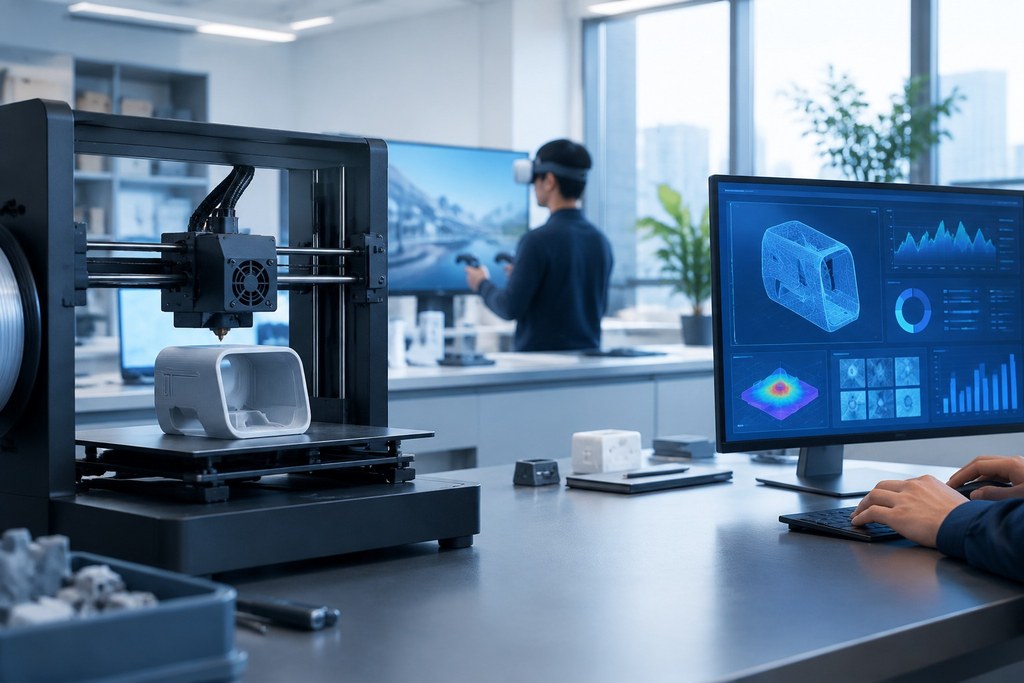
A modern brand innovation lab is a highly technical environment. Advanced tools are integrated seamlessly into the innovation process, significantly improving both its efficiency and quality.
Virtual reality (VR) and augmented reality (AR) have transformed prototype testing and user experience evaluation. VR creates fully immersive virtual environments, letting users experience complete usage scenarios before a product is built. AR overlays digital information onto real environments, offering enhanced interaction. These technologies lower prototyping costs and make user testing in complex scenarios possible.
AI and machine learning platforms serve as the lab's intelligence. They analyze user behavior data automatically, identify usage patterns, anticipate needs, and generate personalized experiences. Natural language processing analyzes user feedback, extracts key insights, and produces reports. Computer vision reads facial expressions and body language to assess emotional response and satisfaction.
IoT enables labs to collect richer, more realistic usage data. Smart sensors track how often, how long, and in what conditions products are used. This real-time data provides an objective basis for product optimization and adds new dimensions to user behavior analysis.
Cloud platforms give the lab substantial compute and storage. Large-scale data processing, complex simulations, and parallel user testing all run on cloud infrastructure. The cloud also lets distributed teams collaborate in real time and share resources and information.
Blockchain plays an important role in protecting intellectual property and distributing value. In open innovation, protecting creative IP and sharing the value of innovation fairly are major challenges. Blockchain's immutability and smart contracts offer a technical solution to both.
Deep Integration of User Participation
User participation is key to a brand innovation lab's success. Twenty years of practice show that user testing alone no longer meets the needs of modern innovation; deep participation and co-creation are what make innovation succeed.
More diverse user roles reflect deeper participation. Users are no longer passive test subjects but active innovation partners. Across each stage of innovation, they act as need finders, idea contributors, concept evaluators, prototype testers, and value co-creators. These varied roles let users' knowledge, experience, and ideas contribute fully to the innovation process.
New forms of participation make user involvement easier and more effective. Focus groups and user interviews still matter, but online communities, crowdsourcing platforms, gamified testing, and virtual co-creation have greatly expanded what's possible. Mobile technology lets users test and give feedback anytime, anywhere, while social networks make interaction and collaboration between users possible.
Deep user insight comes from a range of methods and tools. Beyond traditional qualitative and quantitative research, the lab draws on digital anthropology, behavioral economics, cognitive psychology, and other disciplines to understand users. Physiological measures such as eye tracking, EEG, and galvanic skin response reveal users' subconscious reactions and genuine emotions.
Personalized experiences start with a deep understanding of individual differences. Every user has distinct needs, preferences, and behaviors, and one-size-fits-all solutions rarely serve everyone. The lab uses user personas, behavioral analysis, and machine learning to design tailored experiences for different types of users.
Innovation Through Organizational Culture

A successful brand innovation lab is more than a set of technologies and methods. It reflects a specific organizational culture. Building and sustaining that culture is key to the lab's long-term success.
Psychological safety is the foundation of a culture of innovation. Innovation always carries uncertainty and the risk of failure. Only in a psychologically safe environment will team members propose bold ideas, try unproven methods, and learn from failure. The lab builds a culture that tolerates failure and encourages risk-taking through policy design, leadership by example, and cultural rituals.
Valuing diversity and inclusion sparks the exchange and fusion of ideas that drives innovation. Innovation often comes from collaboration among people with different backgrounds, disciplines, and ways of thinking. The lab actively recruits and develops diverse teams, builds decision-making processes open to differing views, and creates platforms for equal dialog.
Building a learning organization keeps the lab evolving and improving. Fast-changing technology and markets demand strong learning capabilities. The lab has built a systematic knowledge management framework, holds regular retrospectives, and actively brings in new knowledge and methods from outside.
Open collaboration connects the lab deeply with the wider ecosystem. Innovating in isolation no longer meets the demands of modern business. The lab actively partners with universities, research institutes, startups, and industry partners to form an open innovation network.
Path to realizing business value

The ultimate aim of a brand innovation lab is to create lasting business value. Twenty years of practice have produced a range of paths and mechanisms for realizing that value.
Commercializing product innovation is the most direct way to realize value. New concepts incubated in the lab are developed and brought to market, creating new revenue streams and competitive advantage. Successful products deliver financial returns while strengthening brand image and market reach.
Service model innovation opens new room for value. In markets where products are increasingly alike, service innovation often becomes the deciding difference. Through service design, experience refinement, and model innovation, the Lab helps companies move from product providers to solution providers.
Rebuilding the business model unlocks new potential for creating value. Advances in technology and shifts in the market open opportunities for business model innovation, and the lab runs business model experiments to help companies find new ways to create and capture value. Platform, sharing, and subscription economies are all directions the lab may explore.
Greater brand value is a key outcome of innovation experiments. An innovation lab is itself evidence of a brand's capacity to innovate, and successful cases can markedly improve how customers and partners see the brand. Though hard to quantify directly, this added value matters greatly to a company's long-term growth.
Building organizational capability is the hidden value of innovation experiments. Through experimentation, companies develop innovative talent, gain experience, establish innovation processes, and shape an innovation culture. These capabilities lay the foundation for sustained innovation and long-term growth.
Risk Management and Quality Control

Innovation carries risk by nature. Encouraging it while managing that risk well is a central problem every brand innovation lab must solve.
Identifying and assessing technical risk requires specialized expertise and a systematic method. The lab has built a technical risk assessment framework that evaluates each solution across multiple dimensions, including technology maturity, development difficulty, and technical dependencies. For high-risk solutions, the lab designs dedicated validation experiments to reduce uncertainty.
Analyzing and forecasting market risk depends on in-depth research and data analysis. The lab assesses the market risk of new concepts through market research, competitive analysis, and trend forecasting. A/B testing, market pilots, and user research validate market assumptions and reduce risk.
Financial risk is managed through staged investment and milestone management. Innovation projects often need sustained funding, while returns remain uncertain. The lab takes a venture capital approach, dividing each project into stages with clear milestones and exit criteria.
Guarding against IP risk takes expert legal support and systematic safeguards. In open innovation, protecting intellectual property becomes more complex. The Lab has built an IP management system with safeguards at every stage, from the first idea to commercialization.
Clear quality standards, consistently applied, keep innovation reliable. Innovation depends on rapid iteration and learning through trial and error, but that is no reason to lower the bar. The lab has built a quality system suited to how innovation works, protecting both speed and quality.
Balancing Global and Local
For multinational brands, balancing global standards with local needs is a major challenge for innovation labs.
Global innovation platforms let labs in different regions share resources and experience. With cloud platforms, collaboration tools, and knowledge management systems, distributed teams work together in real time to build solutions for global markets.
Localization mechanisms ensure innovation meets the specific needs of each market. Cultural background, consumer habits, technical environment, and regulation can all affect whether a solution fits. The Lab needs local testing and validation processes so global innovation succeeds on the ground.
Cross-cultural innovation teams bring global and local thinking together. Team members from different cultural backgrounds contribute diverse perspectives and ideas, helping develop solutions that work globally while meeting local needs.
Dynamically balancing standardization and localization is the central challenge of global innovation. Too much standardization can overlook local needs; too much localization can sacrifice scale. The lab must find the right balance, keeping core functions consistent while allowing necessary local adaptation.
Outlook for future development trends

As technology advances and the business landscape shifts, brand innovation labs continue to evolve. Several key trends are worth watching.
Deep integration of AI will make labs more intelligent. AI is not only an analytical tool but a partner in innovation. AI assistants can contribute to ideation, support experiment design, automate data analysis, and provide intelligent decision support. Human-AI collaboration will become the dominant mode of innovation.
Metaverse technologies will create entirely new environments for experimentation and new ways to experience them. The convergence of virtual reality, augmented reality, and digital twins will enable fully virtual innovation labs, making remote collaboration, immersive experiences, and virtual prototype testing possible.
Integrating sustainability will change how innovation is evaluated and what it aims for. Beyond commercial value, the lab must also weigh an innovation's impact on the environment and society. Sustainable, green, and social innovation will become key directions.
Deeper ecosystem operations will make the lab a core node in an open innovation network. The lab is more than an internal innovation engine; it is a platform that connects external resources. Partners, customers, suppliers, and research institutions will all take an active part in the innovation process.
Over twenty years, the brand innovation lab has evolved from a simple creative space into a complex innovation ecosystem. Continuous refinement of its iterative testing model has helped companies stay inventive in a fast-changing business environment. Looking ahead, innovation labs must keep evolving in technology, organizational culture, business models, and ecosystem building to meet new challenges and opportunities. A successful brand innovation lab is not only a source of competitive advantage for one company, but a force that moves an entire industry forward.