


















Qingmei Future Insights
Optimizing Creative Workflows with AI
Optimizing Creative Workflows with AI
Creative workflows are undergoing an efficiency revolution, moving from manual handoffs to human–AI collaboration. Traditional processes rely on linear, human-driven coordination: briefings take hours of meetings, ideation requires repeated brainstorming, execution goes through multiple rounds of revisions, and approvals wait at every level. A simple poster takes an average of 3–5 days from brief to final. AI is reshaping this process. According to Adobe research, creative teams using AI-optimized workflows deliver projects 300% faster, iterate 500% more, collaborate 4x more efficiently, and reduce rework by 60%. Midjourney for rapid image generation, ChatGPT for copywriting, Runway for video editing, Notion AI for document collaboration—these tools are not meant to be used in isolation, but embedded systematically across every stage of the creative workflow to form an efficient human–machine pipeline. Optimizing creative workflows with AI is not about stacking tools. It is a systematic rebuild of how creative work is produced, shared, and quality-controlled—and an exponential gain in efficiency.
Rethinking the Creative Workflow with AI
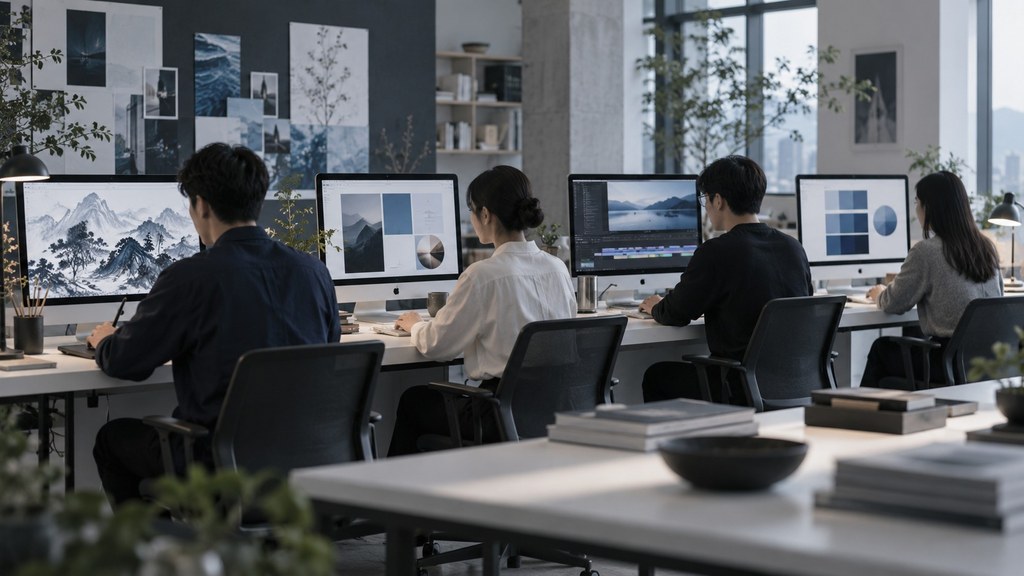
The evolution of AI-optimized creative workflows reflects a deeper understanding of creative productivity and a fundamental shift in how teams collaborate. The traditional manual sequence of "brief–meeting–task assignment–layered approvals–repeated revisions" is giving way to an AI-assisted model of "intelligent breakdown–parallel creation–real-time collaboration–algorithmic support–rapid iteration." In this shift, AI is no longer just a helper at the execution stage. It is a systemic change in productivity and collaboration that must be planned from the top of the creative process.
AI-driven creative workflows redefine how efficiency and value are produced. Traditional creative processes rely on accumulated experience and team collaboration; efficiency is limited by people's time and communication overhead, and linear workflows lead to long waits and costly rework. AI-optimized workflows use algorithms and intelligent tools to break through human bottlenecks, enabling parallel processing, real-time collaboration, and rapid iteration, compressing creative cycles from days to hours. This shift requires companies to move from buying creative services to designing AI workflows and continuously refining human-AI collaboration.
A Fundamental Shift in Process Thinking: From Linear to Parallel Collaboration

Optimizing AI creative workflows starts with rethinking how collaboration works. Traditional creative processes follow "linear thinking": ideation begins only after requirements analysis, design only after the concept is approved, and review only after design is complete, with every stage strictly sequential. AI-optimized processes follow "parallel thinking": multiple stages advance at once, options are generated quickly and tested side by side, and real-time feedback drives immediate adjustment. The process shifts from waterfall to agile.
From blocked waiting to real-time collaboration. In traditional workflows, much of the time goes to waiting for meetings, replies, files, and approvals. One agency found that actual work accounted for only 30% of a project's timeline, while 70% was spent waiting and communicating. AI tools enable real-time collaboration: shared documents edited simultaneously, AI assistants producing first drafts for discussion instantly, cloud assets shared without transfers, and smart approvals returning feedback in seconds. After adopting AI collaboration tools, one creative team cut average project time from 7 days to 2, with waiting time down from 5 days to half a day.
From sequential to parallel workflows. Traditional workflows run in strict order: copy before design, print before video, concept before execution. AI makes parallel work possible. Copy and visuals develop together (AI suggests copy and imagery at once), multiple versions progress in parallel (AI generates 10 options to choose from), and concept and execution advance together (ideating while producing with AI tools). A brand campaign that would traditionally take 10 days, with 2 for copy, 3 for design, and 5 for video, ran all three at once in a parallel AI workflow, finishing in 3 days with 3 complete options.
Faster iteration: from one-way handoffs to two-way feedback. The traditional process is one-way. The client submits a brief, the creative team delivers a proposal, the client reviews it, and revisions go back. Each round takes days. AI enables instant two-way feedback. It generates an initial concept as soon as the brief is entered, the client reviews and responds in real time, and AI adjusts immediately. Several rounds are completed within minutes. With AI-assisted tools, one design team cut response time to client feedback from an average of 1 day to 10 minutes. Iteration became 100x faster, and client satisfaction rose markedly.
Rebuilding the Workflow: From Individual Steps to an Integrated System

Optimizing the creative workflow with AI is not about adding an AI tool to one step. It means systematically rebuilding the entire process, from brief to delivery, with AI built in throughout.
AI-enhanced requirements analysis speeds up project kickoff. Traditional analysis relies on repeated meetings: the client describes needs, the team interprets them, and details are confirmed again and again, with misunderstandings often causing rework later. With an AI requirements assistant, the client enters a description and AI extracts key information (target audience, core objectives, deliverable types, timeline, and budget), generates a structured requirements document, flags missing information, and suggests reference cases to align expectations. One consulting firm using an AI requirements tool cut alignment meetings from an average of 3 two-hour sessions to 1 thirty-minute session, and reduced misunderstanding rates by 70%.
In ideation, AI helps break through creative limits. Traditional ideation depends on team brainstorming—results hinge on participants' energy and experience, fall easily into familiar patterns, and yield a limited number of ideas. With an AI ideation system, a team inputs the project brief, and AI draws on a vast library of cases to generate dozens of creative directions, suggest different angles, recommend relevant visual styles and references, and produce concept images to support the pitch. After adopting an AI creative assistant, one independent creative agency increased the average number of concepts per pitch from 3 to 12, significantly expanding creative range and client choice.
In execution, an integrated toolchain makes creation seamless. Traditionally, teams switch between tools: Photoshop for design, Premiere for video, Word for copy. Switching takes time, and data rarely moves between them. An integrated AI workspace brings every capability onto one platform, including copy generation, image generation, video editing, and voice synthesis, with a central asset library, one-click export to multiple formats, and automatic version history. One digital media team using an AI creative workspace produced content 5x faster and went from 10 people to 3.
In the approval stage, AI assistance speeds up decisions. Traditional approval relies on human judgment, which is subjective, inconsistent, and slow. An AI approval assistant automatically checks basic specifications (size, format, brand guidelines), flags potential issues, surfaces comparable past cases, and predicts a market performance score. At one company, AI approval caught and fixed basic issues before submission, raising the approval rate from 60% to 90% and cutting the approval cycle from 3 days to 4 hours.
Deep Optimization: Efficiency Gains from Single Steps to the Full Chain
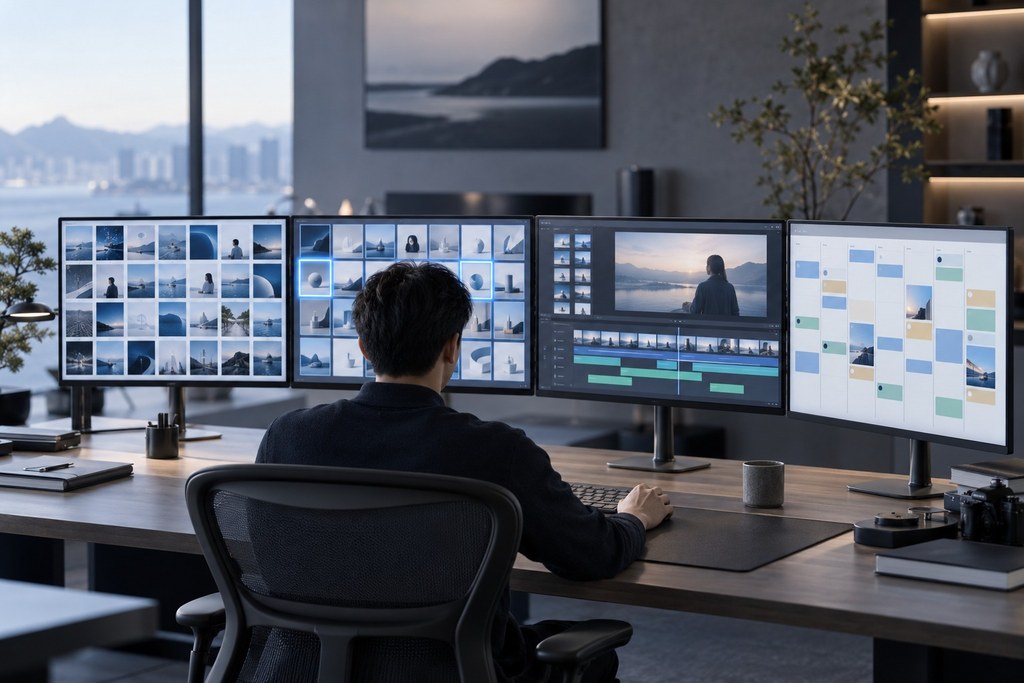
AI-optimized creative workflows create different value in different creative contexts, and each requires tailored customization and process design.
High-volume content production for social media. Social media demands constant output: multiple posts a day, distribution across platforms, and fast responses to trending topics. An AI social workflow automates content calendar planning, generates copy and visuals in batches, adapts formats for every platform in one click, schedules and publishes posts, and collects performance data. One brand's social team used an AI pipeline to go from 2 people barely managing 2 platforms to 1 person plus AI easily running 8, with 10x more content and 8x faster response times.
Large-scale parallel testing of ad creative. Performance advertising requires extensive creative testing across copy, visuals, and combinations to find what works best. An AI ad workflow takes product information, generates 100+ creative variants, runs small-budget tests in batches, monitors results in real time, automatically scales the strongest creative, and keeps iterating. One e-commerce advertiser using this workflow increased weekly creative tests from 20 to 500, made finding a breakout creative 15 times more likely, and raised ad ROI by 60%.
A breakthrough in editing efficiency for long-form video. Traditional production is slow: organizing footage, editing, color grading, voiceover, and subtitles can take 2–3 days for a 5-minute video. An AI video workflow automates transcription and timing, identifies highlights, generates multiple edits in one click, adds voiceover and subtitles, and applies style filters in batches. One Bilibili creator using an AI video workflow cut production time from 3 days to 4 hours, moved from weekly to daily uploads, and grew followers 3x faster.
More efficient collaboration on brand campaigns. Large campaigns involve many teams, including strategy, creative, design, copy, and execution, making coordination complex. An AI campaign workflow brings automated project management (task assignment, progress tracking, milestone reminders), a unified asset library, real-time online co-editing, automatic version archiving, and automatic packaging of deliverables. One advertising agency using an AI collaboration platform cut its average campaign production cycle from 45 days to 20, reduced team communication costs by 50%, and delivered more consistent quality.
Building Supporting Systems: Co-Evolving from Tools to Culture

Successful AI workflow optimization depends on more than tools. It requires standards, team capabilities and organizational culture to evolve together.
A standardized template library turns work into reusable assets. AI output depends on the quality of its input, so teams need a standard template library: requirement document templates (for complete information), creative brief templates (for structured input), a prompt template library (for high-quality prompts), and approval checklists (for clear evaluation criteria). One 4A agency built a library of 200+ templates. New hires ramp up quickly, and variance in work quality dropped from 40% to 10%.
Systematic team training builds AI capability. AI tools are easy to learn but hard to master, so training must be structured: tool fundamentals, prompt engineering, workflow design, and shared case studies of strong work. One creative team runs a monthly AI skills workshop. Within six months, its AI tool proficiency rose from 30% to 85%, and AI-assisted creation became a standard skill across the team.
Clear collaboration standards prevent disorder. AI-assisted collaboration requires new norms: file naming conventions, version control practices, approval workflows, and permission principles. One company created an AI Collaboration Handbook defining standards for every stage, bringing order to its teamwork and significantly improving efficiency.
A clear division of labor lets humans and AI each play to their strengths. AI does not replace people. It works alongside them, and that requires clear roles. AI handles foundational work (organizing materials, drafting, format conversion). Humans handle creative work (strategy, creative judgment, quality control). Teams define which steps must be done by people and which AI can lead. One team wrote a human-AI division-of-labor guide that moved AI use from ad hoc to standardized and maximized collaborative efficiency.
Continuous optimization keeps workflows evolving. That means regularly reviewing AI results, gathering team feedback, testing new tools and methods, and updating processes and templates. One creative agency holds a biweekly optimization meeting to refine its process. Over three years, its AI workflow kept evolving, and project delivery became 10x faster.
Conclusion

AI-optimized creative workflows mark a paradigm shift for the creative industry: from workshop to intelligent factory, from inefficient handoffs to seamless collaboration, from linear processes to parallel, agile ones. This is not machines replacing human creativity. It is AI removing capacity limits, freeing creative teams from repetitive work so they can focus on what truly needs human judgment: strategy, ideation and decisions about value.
For companies, optimizing creative workflows with AI is a transformative gain in productivity and a systematic way to build competitive advantage. Companies that embed AI deeply into their workflows and achieve effective human-AI collaboration are building hard-to-match leads in delivery speed, creative output, and responsiveness. Workflow optimization is not a one-time project but an evolving capability, requiring sustained, systematic investment, from tool adoption to process redesign, and from team training to cultural change.
For creative teams, AI workflow optimization is a career upgrade from low-value repetitive tasks to high-value creative work. Creatives who embrace AI tools, master human-AI collaboration, and adapt to new workflows are achieving step changes in efficiency and professional value. With AI handling 80% of foundational work, creatives can devote 100% of their energy to the 20% that matters most, improving both output quality and job satisfaction. Those who resist change and hold on to traditional workflows will gradually lose ground.
Across the creative industry, AI workflow optimization is redefining service standards and the rules of competition. Delivery timelines are shrinking from weeks to days, creative options are expanding from 3 to 10, and iteration is accelerating from days to hours. AI is reshaping client expectations and raising industry standards. Companies that have optimized their workflows can serve clients faster, at lower cost, and with higher quality, while those that lag will lose competitiveness under the new standards. The industry is undergoing an accelerated shakeout.
This is the strategy behind optimizing creative workflows with AI: let AI handle process work so people can focus on creative thinking; replace linear waiting with parallel collaboration, and layered approvals with real-time feedback; use standardization to build reusable assets, and continuous refinement to advance capability. The future of creativity is not a contest between people and AI, but a question of how they work together, finding the right points of collaboration in the workflow to achieve gains in efficiency and value beyond traditional models.